Essential Oils to Relieve Motion Sickness: Natural Travel Support for Nausea (Car, Boat, or Plane)
A calmer stomach starts before the trip does
Motion sickness can turn a simple drive, flight, or cruise into a sweaty, nauseated, headache-y experience—especially for kids, teens, and anyone who’s already sensitive to smells, anxiety, or fatigue. The good news: a few evidence-informed strategies (seat choice, airflow, hydration, and targeted aroma support) can make travel far more comfortable. Below you’ll find essential-oil-forward options, practical application tips, and a “travel-ready” plan you can use in real life—without overcomplicating your routine.
Why motion sickness happens (and why smell can help)
Motion sickness is largely a sensory mismatch: your inner ear feels motion, but your eyes may be locked on a screen or the seat in front of you—your brain gets conflicting signals, and nausea can follow. Many people also notice triggers like heat, strong odors, dehydration, and anxiety.
Aromatic support (like peppermint) is often used because scent is fast—no waiting for digestion—and can be paired with airflow, acupressure, and steady breathing. Research on peppermint aromatherapy shows promise for nausea relief in some settings, though evidence quality varies, and results don’t guarantee the same effect for motion sickness specifically. ( nccih.nih.gov)
Best essential oils for motion sickness support (what to use and how)
1) Peppermint (Mentha piperita): fast, cooling aroma support
Peppermint is one of the most commonly reached-for oils when nausea hits. In clinical research on nausea (for example postoperative and chemotherapy-related nausea), inhaled peppermint has shown potential benefits, but study limitations exist (blinding is hard with a strong scent, and sample sizes can be small). ( nccih.nih.gov)
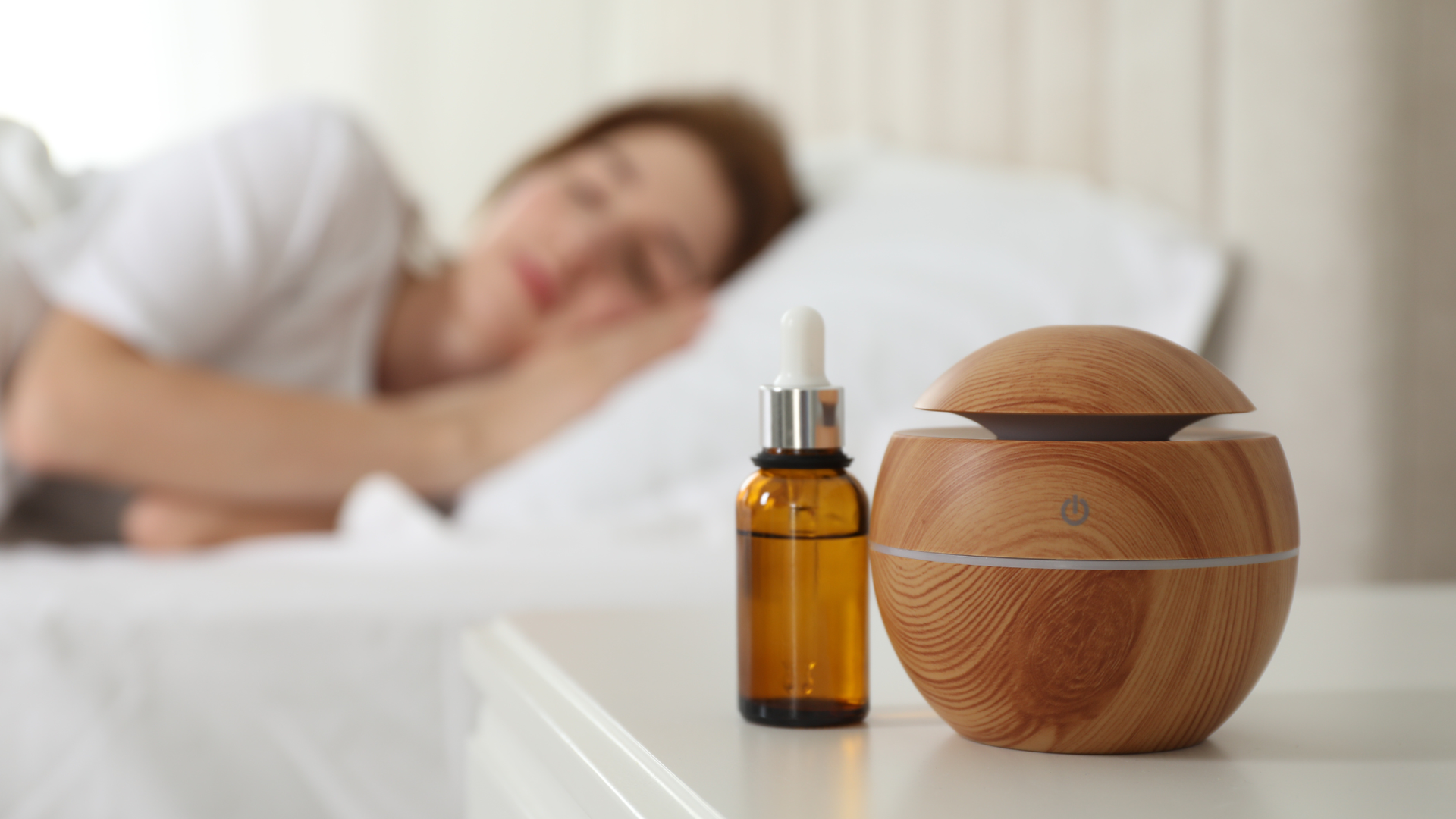
How to use (travel-friendly): Add 1–2 drops to a tissue or cotton round, hold it a few inches from your nose, and take 3–5 slow breaths. Pause, reassess, repeat as needed. If diffusing in a car, use the lowest setting and ensure fresh air flow.
2) Spearmint: a gentler “mint” option
If peppermint feels too intense (especially for children or scent-sensitive travelers), spearmint is often perceived as softer. It can still provide that “fresh air” effect many people want during motion-triggered nausea.
3) Ginger (Zingiber officinale): classic nausea support—best as a multi-sensory approach
Ginger is a long-standing nausea remedy. Many travelers pair ginger aroma with ginger tea/chews (when appropriate) and steady breathing. If you’re using essential oil, keep the scent subtle—some people love it, others find it too “warm” when they already feel queasy.
4) Lavender: helpful when stress is the trigger
Not all motion sickness is purely physical—anticipatory anxiety and tension can amplify nausea. Lavender is often used to support relaxation. Consider it if nausea shows up alongside a racing mind, tight jaw, or shallow breathing.
Step-by-step: a simple “Motion Sickness Support” routine (before + during travel)
Step 1: Start with smart positioning (it matters more than people think)
Choose the most stable seat possible: front seat of a car, over the wings on a plane, or midship on a boat. Keep your gaze on the horizon or a distant fixed point. Avoid reading or scrolling.
Step 2: Airflow + temperature control
Crack a window, turn on a vent, or use a fan where possible. Heat and stuffiness are common nausea accelerators.
Step 3: Use “micro-doses” of aroma (don’t overpower the cabin)
When nausea is building, strong scents can backfire. Aim for short, gentle inhalations.
Quick option: Tissue method (1 drop). Longer option: Personal inhaler. Car option: Vent clip on low.
Step 4: Add acupressure if you’re prone to vomiting
P6 (Neiguan) acupressure wristbands are a popular non-drug option. Research is mixed across different nausea contexts (some studies show benefit; others find no meaningful difference), but many travelers still find it worth trying because it’s low-effort and reusable. ( sciencedirect.com)
For best results, put the bands on before the drive/flight/boat ride begins—not after symptoms spike.
Quick “Did you know?” facts (that help you plan)
Timing matters: Motion sickness meds (if you use them) work best when taken before exposure , not after nausea starts—once symptoms begin, stomach slow-down can reduce absorption. ( cdc.gov)
Habituation is powerful: With repeated exposure, many people improve over time—this “training effect” can outperform any single tool, but it takes consistency. ( cdc.gov)
Kids need extra caution: If you’re considering OTC options for children, use a conservative approach and talk with a pediatric clinician—sedation and paradoxical agitation can occur with some antihistamines, and some options are not recommended for kids. ( cdc.gov)
A simple comparison table: pick your travel support style
| Option | Best for | Pros | Watch-outs |
|---|---|---|---|
| Peppermint inhalation | Sudden nausea, stuffy cabins | Fast, portable, easy to titrate | Can feel too strong for some; avoid using near infants’ faces |
| Lavender inhalation | Nausea + anxiety/tension | Supports relaxation and steady breathing | If nausea is purely vestibular, you may need added strategies |
| P6 acupressure wristbands | Frequent travelers, vomiting-prone | Reusable, drug-free, hands-off once on | Evidence is mixed across populations; placement matters |
| OTC motion sickness meds | High-risk trips (boats, winding roads) | Can be effective when taken before exposure | May cause drowsiness; some options not appropriate for kids |
A United States travel angle: what helps on real-world trips
In the U.S., motion sickness commonly shows up during mountain drives, long highway trips, and boat days where heat and dehydration sneak up. Build your “comfort stack” around basics first: cool air, horizon viewing, light meals, and hydration. Then add your preferred support (peppermint tissue, inhaler, or a calming blend) in short, controlled sessions.
If you’re traveling with kids: keep scents very light, choose gentle options, and prioritize airflow and breaks. For anyone with frequent or severe symptoms, consider a clinician-approved plan—especially before cruises or long flights. ( cdc.gov)
CTA: Build your travel-ready essential oil kit
If you want help choosing a simple set of oils for nausea relief and travel support—plus family-friendly ways to use them—YL Family can guide you toward options that fit your routine and comfort level.
FAQ: Essential oils and motion sickness
What’s the best essential oil for motion sickness nausea?
Peppermint is a popular first choice because it’s fast and fresh-smelling, and inhalation has shown potential for nausea relief in some clinical contexts. If peppermint is too intense, spearmint or lavender (especially if stress is involved) can be good alternatives. ( nccih.nih.gov)
How do I use essential oils for nausea on a plane or in a car?
Keep it subtle: put 1 drop on a tissue/cotton round and take a few slow breaths. Avoid strong diffusion in shared spaces. Pair scent with cool airflow and looking at the horizon (or a fixed distant point).
Do motion sickness wristbands work?
Evidence is mixed across different types of nausea; some studies show benefit and others show no significant effect. Many travelers still like them because they’re simple and non-drug, and they can be combined with aroma support and travel habits. ( sciencedirect.com)
Is it better to treat motion sickness before it starts?
Yes—prevention is usually easier than rescue. This is especially true for medications, which are most effective when taken before exposure to motion. With essential oils, many people also do better using a small amount early rather than waiting for severe nausea. ( cdc.gov)
When should I talk to a clinician?
If motion sickness is severe, frequent, associated with migraines/vertigo, or happening without clear motion triggers, get medical guidance. Also ask for help before using motion-sickness medications for children, during pregnancy, or if you take sedating medications. ( cdc.gov)
Glossary (quick definitions)
Aromatherapy: Using scent from essential oils for supportive purposes (often via inhalation).
Habituation: The body’s tendency to adapt to repeated motion exposure over time, reducing symptoms. ( cdc.gov)
P6 (Neiguan) point: A wrist acupressure point commonly targeted with bands for nausea support.
Vestibular system: The inner-ear system that helps regulate balance and motion sensing—often central to motion sickness.