Nighttime Skin Revival: DIY Essential Oil–Infused Night Creams (That Feel Luxurious, Not Complicated)
A hydrating overnight ritual for calmer-looking, well-rested skin
Nighttime is when many people finally slow down—so it’s a natural window to support your skin barrier and your nervous system at the same time. A thoughtfully made, essential oil–infused night cream can deliver comfort and hydration while creating a consistent “wind-down cue” your body learns to recognize.
At YL Family , we’re big believers in simple routines you can actually stick with. This guide walks you through safe dilution basics, easy DIY formulas, and smart ingredient choices—so your night cream feels spa-level, but stays gentle enough for real life.
First, a quick safety note (especially for the face)
Essential oils are concentrated plant materials—not “just fragrance.” Dermatology and eczema education resources regularly note that essential oils can trigger irritant or allergic contact dermatitis in some people, particularly with repeated exposure or sensitive skin. (This is one reason patch testing matters.) ( dermnetnz.org)
For leave-on facial products, many aromatherapy education sources recommend staying in a low dilution range (often around 0.25%–2% depending on the oil, skin sensitivity, and frequency of use). ( achs.edu)
- Patch test your finished product (inner forearm) daily for 3–5 days before using it on your face. ( eczema.org)
- Keep facial dilution low (start at 0.25%–1% if you’re new or sensitive). ( achs.edu)
- Avoid “hot” oils on the face (cinnamon bark, clove, oregano, thyme, lemongrass) unless you have advanced formulation guidance.
Why night creams work differently than daytime moisturizers
A good night cream isn’t about looking “dewy” for a few hours—it’s about supporting the skin barrier while you sleep. Overnight, your skin can lose moisture (transepidermal water loss tends to be higher at night for many people), and dryness can look like dullness, tightness, and more visible texture the next morning.
A well-built formula typically includes: (1) occlusives to slow water loss, (2) emollients to soften, and (3) humectants (if you’re making an emulsion) to help hold water in the upper layers.
DIY night cream options: pick your comfort level
Option A (Beginner): Anhydrous “balm-cream” (no water)
This is the easiest, most shelf-stable DIY because there’s no water (meaning you typically don’t need a preservative). It feels like a rich night cream/balm hybrid—ideal for dry climates, winter skin, or anyone who wants a minimal ingredient list.
- 30 g jojoba oil or squalane (light, face-friendly)
- 15 g shea butter (softening, comforting)
- 5 g beeswax or candelilla wax (structure + occlusion)
- Essential oils at 0.5%–1% total (see dilution table below)
- Melt wax + shea gently (double boiler).
- Remove from heat, stir in liquid oil.
- Cool until warm (not hot), then add essential oils.
- Pour into a clean jar, let set.
Option B (Intermediate): True cream (water + oil emulsion)
If you want that classic “cream” feel, you’ll combine water and oils with an emulsifying wax. Because it contains water, a broad-spectrum preservative is strongly recommended for safety.
- 70 g distilled water or hydrosol
- 20 g carrier oils/butters (e.g., jojoba + shea)
- 6 g emulsifying wax
- 3 g humectant (e.g., glycerin)
- Preservative (per manufacturer %)
- Essential oils at 0.25%–1% total to start ( achs.edu)
Tip: if you’re not ready to formulate with preservatives, stick with Option A (anhydrous) and keep tools/jars very clean.
Dilution made easy (with a quick table)
Facial skin is more reactive than body skin for many people. If you’re essential-oil curious but cautious, start low and scale slowly only if your skin stays happy. Many formulation guides keep facial products in a low range (often up to 2% depending on context). ( achs.edu)
| Finished product size | 0.25% (extra gentle) | 0.5% (gentle) | 1% (common starting point) | 2% (only if well-tolerated) |
|---|---|---|---|---|
| 50 g balm/cream | 0.125 g EO | 0.25 g EO | 0.5 g EO | 1.0 g EO |
| 100 g balm/cream | 0.25 g EO | 0.5 g EO | 1.0 g EO | 2.0 g EO |
Essential oils that pair well with bedtime rituals (gentle approach)
If your goal is “skin revival,” keep the essential oil part supportive and subtle—think comfort, scent association, and relaxation rather than aggressive “spot treatment.” Lavender is one of the most studied oils in sleep-focused aromatherapy research, with systematic reviews reporting improvements in sleep-related outcomes in certain adult groups. ( pmc.ncbi.nlm.nih.gov)
Three blend ideas (keep total EO at 0.25%–1% to start)
- Soft Calm : Lavender + frankincense (simple, grounding)
- Fresh Reset : Lavender + cedarwood (cozy, woody bedtime cue)
- Gentle Glow : Lavender + geranium (floral, “spa-like”)
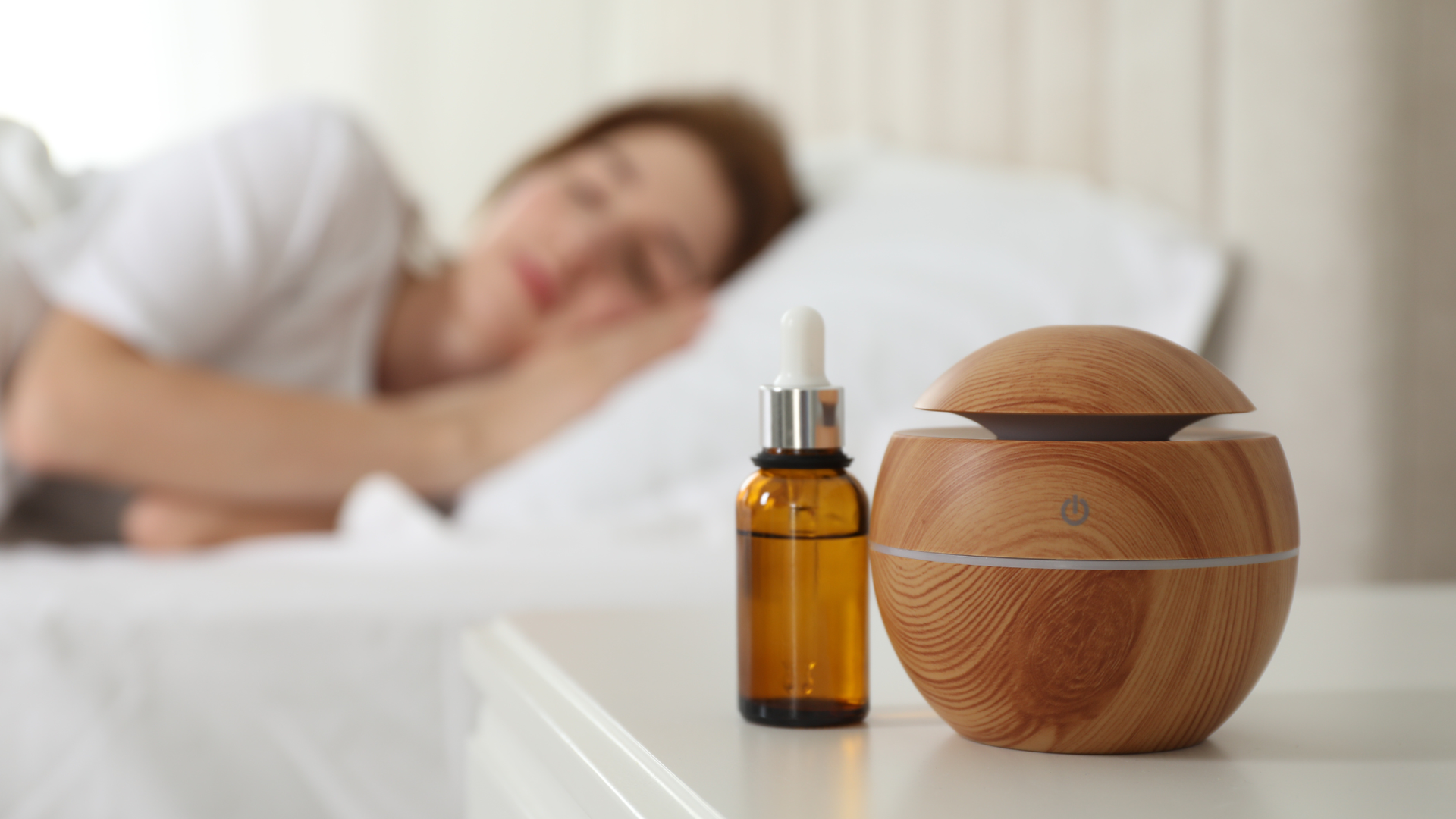
If you’re sensitive, consider using essential oils more through inhalation (diffuser) while keeping your facial product unscented, since skin reactions can happen with direct contact. ( dermnetnz.org)
Who should avoid essential oils in facial products?
- Anyone with a history of allergic contact dermatitis to fragranced products ( dermnetnz.org)
- People with eczema-prone or very reactive skin (many eczema organizations advise extra caution and patch testing) ( eczema.org)
- Those using strong actives (retinoids/acids) who are already experiencing dryness or irritation
How to use your night cream for “overnight skincare” results
- Cleanse gently (avoid stripping). Pat skin slightly damp.
- Apply a small amount of balm/cream and press into cheeks/forehead/chin.
- Neck + hands get the leftover—these areas love overnight moisture too.
- Make it a cue : same time, same steps, low light—your brain learns the pattern.
If your skin feels greasy in the morning, use less (especially with balms). If it feels tight, you may need a bit more product—or a more occlusive formula (slightly more wax/butter).
Local angle: clean, dry-air comfort across the United States
Many regions across the United States deal with seasonal swings—cold winter air, indoor heating, windy shoulder seasons, and summer sun exposure. Those shifts can show up as dryness, “crepey” texture, or a skin barrier that feels more reactive than usual.
A simple hydrating night ritual is one of the easiest ways to stay consistent through those changes: keep your formula gentle, keep your dilution low, and focus on barrier-supporting carriers. If you’re in a high-and-dry climate (like much of the Mountain West), richer balms often feel especially comforting at night.
Ready to build your nighttime skin ritual?
Whether you want a gentle essential oil blend for a calming bedtime cue or you prefer to keep your skincare unscented and use aromatherapy by diffusion, YL Family can help you choose clean, family-friendly options that fit your routine.
Shop YL Family FavoritesFAQ: Essential oil night creams
Glossary