Supporting Hormonal Balance: Oils That Nurture Internal Harmony
A steadier day starts with steadier signals—support your routines, then your rituals
Hormones don’t live in isolation. Sleep, stress load, movement, nutrition, and everyday exposures all shape the “signals” your body sends and receives. At YL Family , we focus on practical, family-friendly habits plus simple essential oil routines that fit real life—so you can support internal harmony without turning wellness into a second job.
What “hormone balance” really means in daily life
“Hormonal balance” often gets reduced to one gland or one supplement. In reality, it’s a whole-body conversation involving:
Stress-response hormones that influence energy, cravings, and sleep quality.
Sleep-wake signals that affect appetite regulation and mood stability.
Metabolic hormones that respond to meals, movement, and muscle mass.
Reproductive hormones that shift across the month (and across decades).
Essential oils can’t “fix” hormones on their own. What they can do is support the routines that most strongly influence hormonal steadiness—especially stress regulation, sleep quality, and consistent self-care.
Where essential oils and supplements fit (and where they don’t)
Think of oils as supportive tools for nervous-system regulation and consistent routines. For example, lavender aromatherapy has research support for improving adult sleep quality in randomized trials and meta-analyses. ( pubmed.ncbi.nlm.nih.gov)
Meanwhile, “essential oil supplements” should be approached with extra care: product quality, individual sensitivity, and personal health context matter. If you’re pregnant, nursing, managing a medical condition, or taking medications, it’s smart to check in with a qualified clinician before adding new ingestible products.
Our goal at YL Family is simple: help you build a safe, sustainable routine that supports internal harmony —without overpromising or pushing extremes.
A step-by-step routine for internal harmony (morning to night)
1) Morning: set your “baseline” before the day sets it for you
Hormonal steadiness loves consistency. Aim for a short, repeatable morning sequence:
Light + water: step outside for 3–10 minutes and drink a full glass of water.
Movement snack: 5 minutes of mobility, a brisk walk, or gentle strength work.
Aromatherapy anchor: diffuse a calming or uplifting blend while you get ready.
This pairing (light + hydration + movement) supports circadian rhythm cues—one of the most overlooked foundations of hormone balance.
2) Midday: use scent + breath to downshift stress signals
When stress stays “on” for hours, sleep and appetite cues often get noisier. Try this 2-minute reset:
Step A: Add 1–2 drops of essential oil to an aromastick or personal inhaler.
Step B: Inhale gently for 3 slow breaths.
Step C: Exhale longer than you inhale (ex: inhale 4 seconds, exhale 6 seconds).
This is especially useful before you reach for caffeine or sugar because you’re “wired,” not truly hungry.
3) Evening: protect sleep—your most powerful hormone-support habit
Sleep affects next-day mood, cravings, energy, and resilience. If you want one “highest return” habit, start here.
Dim lights 60–90 minutes before bed.
Warm shower or bath (skip adding undiluted oils directly to bath water).
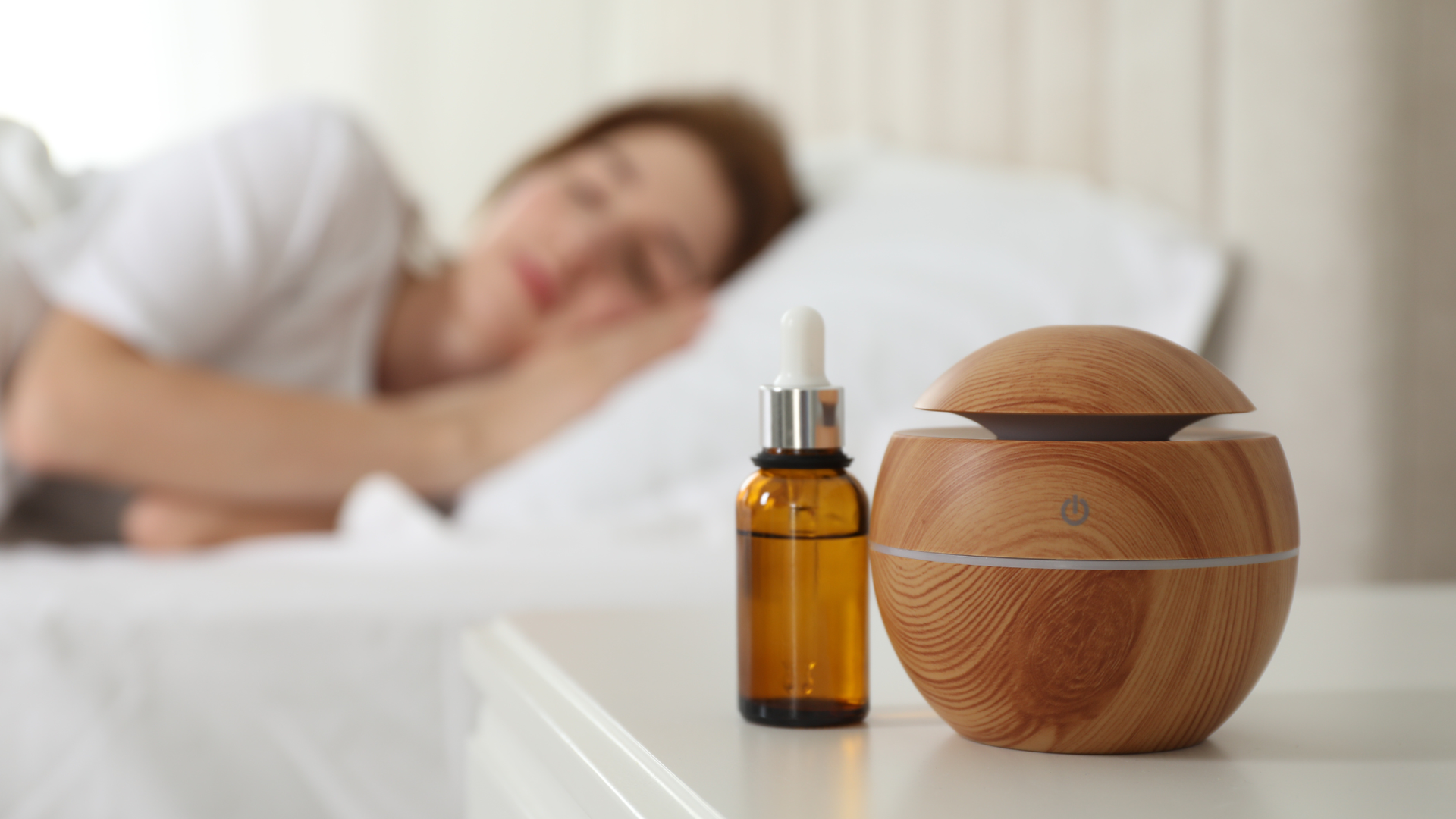
Diffuse lavender for a consistent bedtime cue—research supports lavender’s sleep benefits in adults. ( pubmed.ncbi.nlm.nih.gov)
Set a “same wake time” most days; it’s often more important than bedtime.
4) Topical use: keep it gentle, consistent, and skin-safe
If you like topical application (like a roller), dilution matters—especially for sensitive skin and for kids.
Adult everyday dilution: commonly 1–2% in a carrier oil for leave-on use (approx. 6–12 drops per 1 oz / 30 mL carrier).
Kids: use lower dilutions and be cautious with oil selection; reputable pediatric guidance emphasizes dilution and avoiding ingestion. ( hopkinsmedicine.org)
Sun caution: some citrus oils can be phototoxic on skin; keep dilutions within established guidance and avoid sun exposure on treated areas. ( achs.edu)
Patch test: if you’re sensitive, patch test diluted oil first and discontinue if irritation occurs.
Quick comparison: common ways to use essential oils for daily balance
| Method | Best for | Good to know | Practical tip |
|---|---|---|---|
| Diffuser | Setting a calm home tone, bedtime cues | Consider others in the home; ventilate as needed | Use the same scent at the same time daily (habit cue) |
| Personal inhaler (aromastick) | On-the-go stress support | More personal; less impact on shared spaces | Pair with slow exhale breathing for faster downshift |
| Topical (diluted) | Targeted self-care rituals (neck/shoulders, feet) | Dilution + sun caution for phototoxic citrus oils ( achs.edu) | Start at 1% and increase only if well-tolerated |
| Bath/shower (indirect) | Relaxation routine | Avoid adding undiluted oils directly to bathwater ( hopkinsmedicine.org) | Diffuse in the room or use a properly diluted product |
Did you know?
Lavender has clinical research support for sleep quality in adults. If hormone balance feels “off,” improving sleep consistency is often a meaningful first step. ( pubmed.ncbi.nlm.nih.gov)
Some citrus oils can increase sun sensitivity on skin (phototoxicity). Dilution limits matter, especially for leave-on blends. ( achs.edu)
For children, dilution and oil selection are critical. Conservative guidance recommends against swallowing oils and highlights age-specific cautions. ( hopkinsmedicine.org)
How to choose “hormone balance oils” responsibly
When people search for hormone balance oils , they’re often looking for something that helps with sleep disruption, tension, irritability, or that “wired-tired” feeling. A responsible approach focuses on what you want to support rather than making medical claims.
If your goal is calmer evenings
Prioritize a consistent bedtime routine and calming aromatherapy. Lavender is a well-known option with research support for adult sleep quality. ( pubmed.ncbi.nlm.nih.gov)
If your goal is steadier mood during a busy day
Use an inhaler or diffuser as a “pause button,” paired with breathwork. Keep it simple and repeatable—consistency is more powerful than complexity.
If your goal is cleaner personal care and home routines
Hormones respond to the “inputs” of daily life. Many families start by swapping personal care and home products to support a cleaner routine they can maintain long-term.
Safety note: Avoid ingesting essential oils without qualified guidance, and use extra caution during pregnancy, breastfeeding, and early childhood. Pediatric safety guidance also warns against swallowing oils and highlights specific age-related precautions. ( hopkinsmedicine.org)
A U.S. perspective: real-life routines that support internal harmony
In the United States, many households juggle busy schedules, screen-heavy evenings, and inconsistent sleep. If you want a practical “internal harmony” plan, start with the basics you can repeat:
Weeknight bedtime guardrails: pick a consistent wind-down start time (even if sleep time varies).
Protein-forward breakfast: helps many people feel steadier through late morning.
Daily movement: mix gentle mobility + 2–3 days/week of strength work.
Home scent cues: use the same essential oil routine at the same time of day to reinforce habits.
If you’re building family routines, keep oils in a designated spot, label blends clearly, and use child-safe practices (low dilution, supervised use, and no ingestion). ( hopkinsmedicine.org)
Ready to build your “internal harmony” routine?
Explore essential oils and wellness products designed to support calm, sleep, and daily balance—then keep it simple with a routine you’ll actually use.
Educational content only. Not intended to diagnose, treat, cure, or prevent any disease. For personalized guidance—especially during pregnancy/nursing or when using medications—consult a qualified healthcare professional.
Keep your routine consistent (and doable)
If movement is part of your balance plan, pairing gentle exercise with your evening wind-down can make your aromatherapy routine even more effective as a “cue” for rest.
FAQ: Supporting hormone balance with essential oils
What are the best “hormone balance oils” to start with?
Start with what supports your biggest daily lever : sleep, stress, or a consistent routine. For many adults, lavender is a practical starting point because it’s commonly used for relaxation and has research support for sleep quality. ( pubmed.ncbi.nlm.nih.gov)
Can I apply essential oils directly to my skin?
Most people do best with dilution in a carrier oil for leave-on use. Also be mindful that some citrus oils can increase sun sensitivity (phototoxicity) and should be used within established dilution limits. ( achs.edu)
Are essential oils safe for kids and teens?
They can be used thoughtfully, but children require lower dilutions , careful oil selection, and adult supervision. Conservative pediatric guidance also recommends not swallowing oils and notes specific cautions for certain oils in very young children. ( hopkinsmedicine.org)
Do essential oil supplements help with internal harmony?
Supplements can be part of a wellness routine, but they’re not a shortcut. Quality, proper use, and your personal health context matter. If you’re pregnant/nursing, have a health condition, or take medications, check with a qualified clinician before adding ingestible products.
How long does it take to notice a difference?
Many people notice the biggest “shift” when they keep a routine consistent for 2–4 weeks—especially with sleep timing, daily movement, and a calming evening ritual. Aim for small steps done often, not big changes done briefly.
Glossary
Carrier oil: A neutral oil (like jojoba or fractionated coconut oil) used to dilute essential oils for safer topical application.
Dilution (1–2%): The percentage of essential oil in a blend. A common everyday leave-on range for adults is 1–2% depending on sensitivity and oil type.
Phototoxicity: A skin reaction that can occur when certain oils (often expressed citrus) are applied topically and then exposed to UV light. ( achs.edu)
Circadian rhythm: Your internal 24-hour clock that influences sleep-wake timing, energy patterns, and many regulatory signals in the body.