Menopause Support with Essential Oils: Natural Relief for Hot Flashes and Mood Swings
Written for health-conscious women and families across the United States who want clean, practical tools for day-to-day comfort—without overpromising or replacing medical care.
A calmer way to move through the transition
Menopause can feel unpredictable: sudden heat, interrupted sleep, irritability that shows up out of nowhere, and a nervous system that seems “on edge.” While hormone therapy is the most effective treatment for hot flashes for many people, there are also evidence-based nonhormonal options—and many women still want gentle, at-home rituals that support comfort and emotional steadiness. Essential oils can be one piece of that supportive routine when used thoughtfully, diluted correctly, and paired with lifestyle basics that actually move the needle. ( pubmed.ncbi.nlm.nih.gov)
What menopause symptoms are we talking about?
Vasomotor symptoms (VMS): hot flashes & night sweats
VMS are the classic “sudden heat + sweating + flushing” episodes that can also cause chills afterward. They can disrupt work, sleep, confidence, and daily routines. If your symptoms are moderate to severe, it’s worth talking with a clinician about proven nonhormonal treatments (and whether hormone therapy is appropriate). ( pubmed.ncbi.nlm.nih.gov)
Mood swings, irritability, and “wired-but-tired” evenings
Hormonal changes can affect sleep quality and stress tolerance. Many people find that routines that cue the body toward downshifting—consistent bedtime, breathing practices, and calming scents—help them feel more resilient day to day. Research on aromatherapy shows potential benefits for stress/anxiety and sleep in some populations, though results vary and quality is mixed. ( ncbi.nlm.nih.gov)
Hormonal balance: what that phrase really means
“Hormonal balance” is often used as a catch-all. In real life, during perimenopause and menopause, estrogen and progesterone levels shift and become more variable. Essential oils won’t “replace” hormones—but they may support comfort, relaxation, and routines that protect sleep and stress response, which can indirectly influence how intense symptoms feel.
A reality-based approach: essential oils + evidence-based care
If hot flashes are affecting your sleep or daily functioning, you deserve options that are backed by strong evidence. The Menopause Society (formerly NAMS) lists several nonhormonal treatments with good evidence for VMS (including certain SSRIs/SNRIs, gabapentin, and the NK3 receptor antagonist fezolinetant). Essential oils are not listed as a recommended treatment for VMS in that position statement—but they can still be used as a supportive, comfort-focused practice alongside proven care. ( pubmed.ncbi.nlm.nih.gov)
If you’re already using prescription options (including newer nonhormonal hot flash medications), ask your clinician/pharmacist about interactions and safety. For example, the FDA has issued safety communications regarding rare but serious liver injury risk with fezolinetant (Veozah) and recommends liver testing and monitoring. ( fda.gov)
Quick “Did you know?” facts
Hot flash triggers are often personal. Alcohol, stress, warm environments, and weight changes can make symptoms feel more intense for many people. Tracking patterns for 1–2 weeks can be surprisingly helpful. ( my.clevelandclinic.org)
Lower doses are usually safer with essential oils. Most reputable safety guidance recommends diluting for topical use and avoiding high-percentage “neat” application. ( nowfoods.com)
Some citrus oils can increase sun sensitivity. Phototoxic oils (notably some bergamot and expressed citrus oils) can raise burn risk if applied to skin before UV exposure—so placement and dilution matter. ( tisserandinstitute.org)
How to use essential oils for menopause support (safe, simple, effective-feeling)
These are comfort-focused strategies to support hot flash relief, mood steadiness, and sleep routines. If you have asthma, migraines, very sensitive skin, are pregnant/nursing, or take multiple medications, get personalized guidance before adding new essential oils.
Step 1: Start with dilution you can stick with
For most healthy adults, a 2% dilution is a common “everyday body” guideline (and 1% for sensitive skin or facial areas ). Patch test any blend, especially if you’re new to topical use. ( nowfoods.com)
Practical shortcut (per 1 oz / 30 mL carrier oil):
1% ≈ 6 drops total essential oil
2% ≈ 12 drops total essential oil
(Drop size varies, but this works well for home blending.)
Step 2: Build a “cool-down” routine for hot flashes
Lifestyle strategies like keeping your room cool, dressing in layers, and using cold beverages/compresses can reduce the intensity of episodes for many people. Pair these basics with a scent cue that signals “cool and calm” to your brain. ( my.clevelandclinic.org)
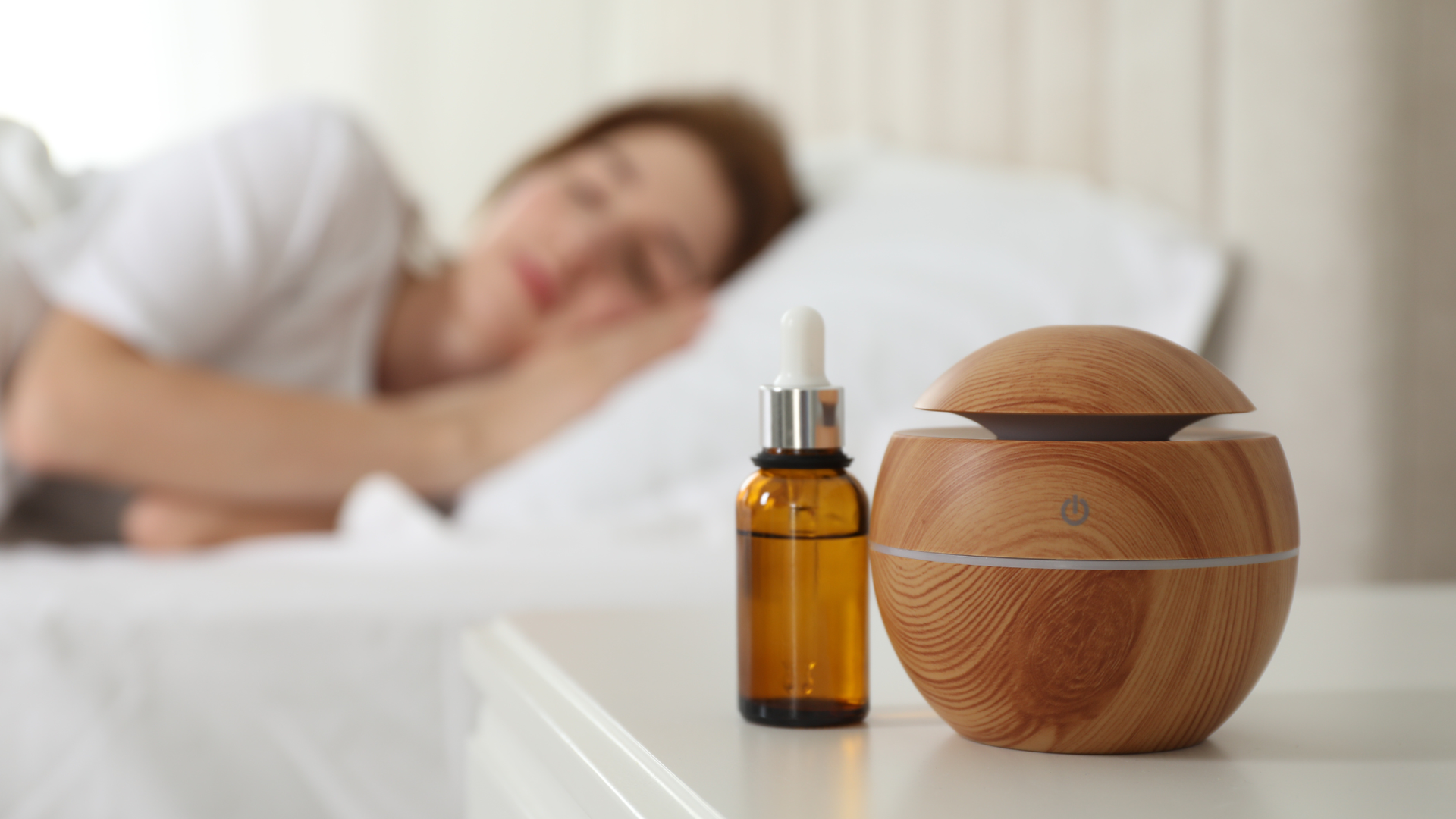
Try this: Keep a roller bottle blend (properly diluted) on your bedside table and apply to wrists/neck (avoid eyes/mucous membranes) when you wake up overheated. Follow with a slow exhale breathing pattern for 60–90 seconds.
Step 3: Support mood with a “nervous system reset” cue
For mood swings and irritability, the goal is consistency: a brief practice you can repeat daily. Evidence on aromatherapy for anxiety/sleep is mixed but suggests potential benefit for some people, especially as part of a routine. ( ncbi.nlm.nih.gov)
Try this: Diffuse a calming blend for 20–30 minutes while you do an evening wind-down (stretching, journaling, screen-free shower). If you’re scent-sensitive, use fewer drops and ventilate the room.
Step 4: Watch for common safety pitfalls
- Don’t apply undiluted oils to skin. Dilution reduces irritation risk and helps you use oils consistently. ( nowfoods.com)
- Avoid phototoxic mistakes. If using bergamot or expressed citrus oils topically, keep dilution very low and avoid UV exposure on that area for a full day (or choose a bergapten-free/FCF version when available). ( tisserandinstitute.org)
- Medication + supplement caution. If you’re using prescription therapies for VMS (including newer nonhormonal options), follow clinician guidance and monitoring recommendations. ( fda.gov)
Optional comparison table: which approach fits which goal?
| Approach | Best for | What to expect | Safety notes |
|---|---|---|---|
| Lifestyle cooling + trigger tracking | Mild–moderate hot flashes; daily control | Often improves intensity/frequency over time | Generally safe; personalize triggers (alcohol, warm rooms, stress). ( my.clevelandclinic.org) |
| Essential oils (diffusion/topical dilution) | Mood support, relaxation, bedtime cues | Comfort-focused; works best as a consistent routine | Dilute; patch test; avoid phototoxic oils before sun. ( nowfoods.com) |
| Evidence-based nonhormonal prescriptions | Moderate–severe VMS affecting quality of life | Can significantly reduce hot flashes/night sweats | Follow clinician guidance; some options require monitoring. ( pubmed.ncbi.nlm.nih.gov) |
A local angle for the United States: keeping routines realistic
Across the U.S., many women juggle menopause symptoms alongside work, caregiving, and packed schedules. The routines that tend to “stick” are the ones that are:
- Portable: a diluted roller for on-the-go, plus a “cool-down plan” (cold water, fan, layers).
- Repeatable: same wind-down steps most nights, even if it’s only 10 minutes.
- Paired with basics: consistent movement, alcohol awareness, and stress management—since these are frequent levers for symptom intensity. ( my.clevelandclinic.org)
If you’re not sure whether your symptoms are “normal,” it’s reasonable to bring it up at your next appointment. Severe night sweats, new palpitations, or sleep disruption that’s affecting mental health deserves prompt support.
Shop supportive wellness tools with YL Family
If you’d like help building a simple, safe routine for menopause comfort—sleep, stress, and “cool-down” rituals—YL Family can guide you toward clean options that fit your household.
FAQ: menopause essential oils, hot flash relief, and hormonal balance
Do essential oils actually stop hot flashes?
Essential oils are best viewed as supportive tools for comfort, relaxation, and sleep routines—not a standalone, evidence-based treatment for moderate to severe vasomotor symptoms. If hot flashes are significantly affecting your life, talk with a clinician about options with stronger evidence. ( pubmed.ncbi.nlm.nih.gov)
What’s a safe dilution for topical use?
Many safety references recommend 1–3% dilution for adults depending on sensitivity and area used (often ~2% for body use and ~1% for face/sensitive skin). Always patch test and avoid using oils undiluted. ( nowfoods.com)
Are there essential oils I should avoid before going in the sun?
Yes—some oils (notably certain bergamot and expressed citrus oils) can be phototoxic when applied to skin, increasing sunburn risk. If you’re using these, keep dilution low, avoid sun exposure on that area, or choose bergapten-free options when available. ( tisserandinstitute.org)
What else (besides oils) can help hot flashes fast?
Practical cooling strategies often help: dress in layers, keep your bedroom cool, use a fan, sip cold beverages, and use cool compresses. Reducing alcohol and managing stress can also help many people. ( my.clevelandclinic.org)
When should I talk to a clinician?
If hot flashes/night sweats are moderate to severe, interrupt sleep repeatedly, or impact your mood and daily functioning, it’s time. There are multiple nonhormonal options with evidence (and hormone therapy may be appropriate for some). ( pubmed.ncbi.nlm.nih.gov)
Glossary (quick definitions)
Vasomotor symptoms (VMS): Hot flashes and night sweats caused by changes in temperature regulation during menopause. ( pubmed.ncbi.nlm.nih.gov)
Carrier oil: A neutral oil (like jojoba, fractionated coconut, or sweet almond) used to dilute essential oils for safer topical use.
Dilution (e.g., 1–2%): The percentage of essential oil in a blend. Lower dilutions are typically recommended for regular use and sensitive skin. ( nowfoods.com)
Phototoxicity: A skin reaction that can happen when certain essential oils are applied topically and the skin is exposed to UV light, increasing burn/discoloration risk. ( tisserandinstitute.org)
Friendly note: This content is for educational purposes and does not replace medical advice. Essential oils are potent and should be used with appropriate dilution and safety precautions—especially if you have medical conditions, take medications, or have a history of skin sensitivity.