Family Road Trip Wellness: Essential Oils to Stay Energized & Soothe That Occasional Winding Road Upset
A calmer car ride starts before you buckle up
Road trips are supposed to feel like freedom—snacks, playlists, and a change of scenery. For a lot of families, reality includes cranky energy dips, travel nerves, and motion sickness that can derail the day fast. At YL Family in Parker, Colorado, we help families build simple, repeatable routines with essential oils and toxin-aware habits—so travel days feel steadier, not stressful.
Important note: Essential oils are not medications and shouldn’t be marketed as treating or curing health conditions. If someone has frequent vomiting, severe dizziness, dehydration, migraine, pregnancy-related nausea, or a medical condition, it’s best to ask a licensed clinician for personalized guidance. The CDC also recommends discussing motion-sickness medications and prevention options with a healthcare professional when needed.
Why that occassional stomach upset happens when driving (and why kids often get hit harder)
Motion sickness usually shows up when your eyes and inner ear send mixed signals. If your body feels movement but your eyes are focused on something still (like a tablet or book), nausea and dizziness can follow quickly. Kids can be more sensitive—especially in winding mountain drives, stop-and-go traffic, or when they’re overtired.
Essential oils can be a helpful part of a broader plan: fresh air, good hydration, screen breaks, smart seating choices, and (when appropriate) clinician-recommended motion-sickness tools.
A practical “Travel Oils” approach: focus on comfort, not complexity
The goal isn’t to pack your entire cabinet. Most families do best with a small travel-ready set that supports three moments of the day: (1) departure , (2) mid-drive reset , and (3) arrival wind-down .
Core categories to pack
Step-by-step: a family-friendly road trip wellness routine
1) Before you leave: set the “steady stomach” foundation
Start with basics that reduce motion-sickness risk: light, non-greasy foods; water; and a plan to minimize screen time during the first hour. If a family member is prone to motion sickness, consider chatting with a clinician about prevention tools and timing—many options work best when taken before symptoms start.
2) At the first “uh-oh” moment: use inhalation first, not skin
For many families, the simplest approach is aromatic use —a personal inhaler, a cotton ball in a vent clip container (not dripping oil onto plastic), or a quick “cap and inhale” at a safe distance. Peppermint has some evidence for nausea support in certain settings, and ginger is widely used for nausea comfort. Keep it subtle: strong smells can backfire if someone is already queasy.
Pro travel tip: Ask the queasy passenger to look toward the horizon (not down at laps), crack a window for fresh air, and take slow breaths while inhaling. These non-oil strategies are often the “fastest win.”
3) Mid-drive reset: energy without the crash
Road trip fatigue is real—especially when you’re juggling navigation, snacks, and backseat negotiations. Instead of relying only on sugar and caffeine, try a 5-minute reset at a stop: walk briskly, drink water, and choose an aroma that feels bright and clean. Many people find citrus-forward scents feel uplifting, while mint can feel “awakening.” Keep it light and avoid overpowering blends in the car.
4) Arrival wind-down: calm the nervous system (especially for kids)
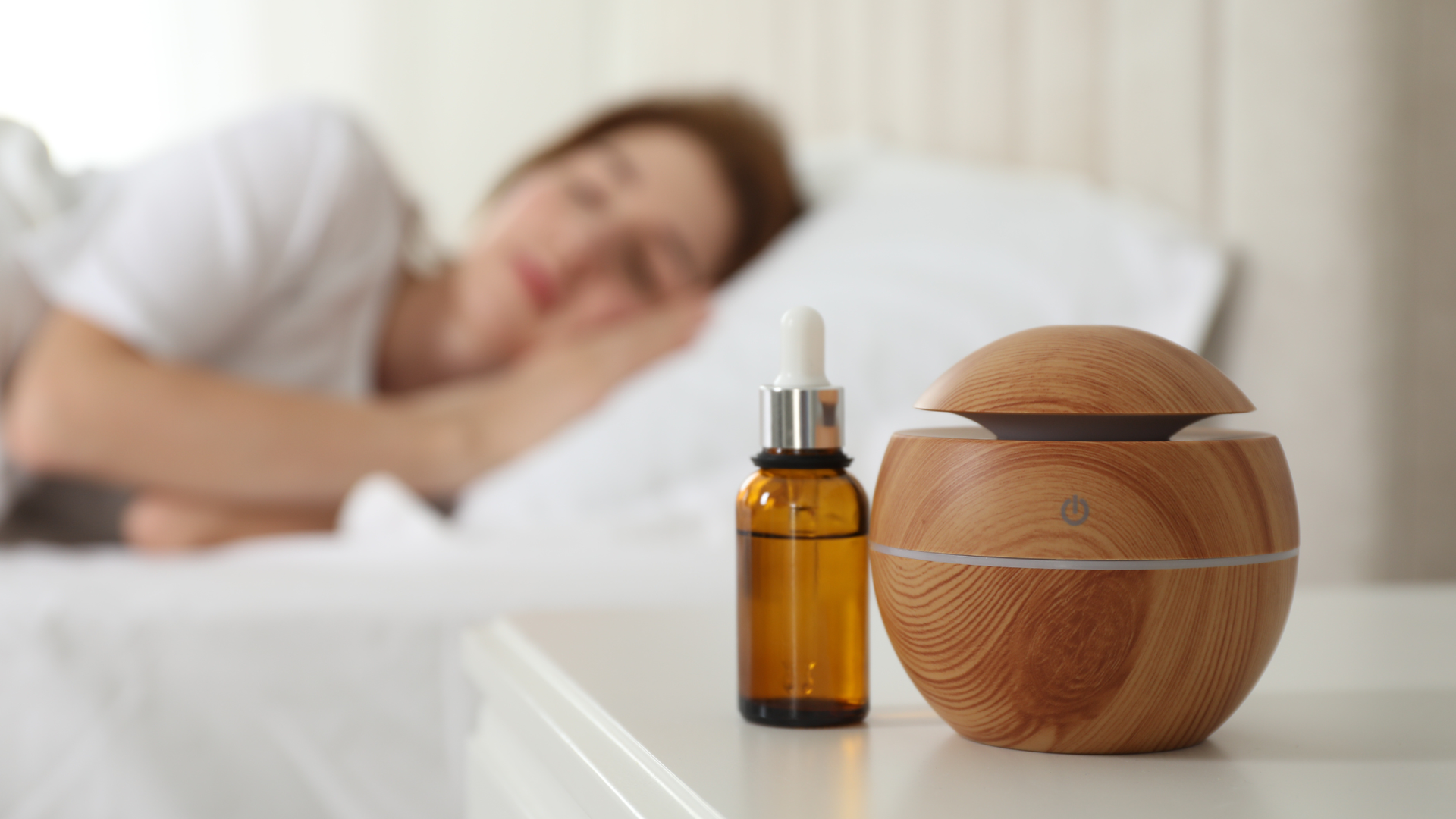
New beds, late dinners, and overstimulation can make sleep harder away from home. A consistent “same as home” routine helps: warm shower, minimal screens, dim lights, and a familiar relaxing aroma in the room (diffuser used safely and briefly). This is also a great moment for gentle stretching and hydration.
Quick comparison table: what to use when
| Road trip moment | Goal | Best format | Notes |
|---|---|---|---|
| First hour in the car | Prevent queasiness + keep calm | Inhalation (personal inhaler / gentle aroma) | Avoid heavy food + screens; aim eyes toward the horizon |
| Early nausea signs | Comfort + steady breathing | Inhalation first | Keep scents subtle; fresh air helps fast |
| Midday energy dip | Alertness without jitters | Aroma + movement | Pair with a 5-minute walk and water |
| Bedtime in a new place | Relaxation + routine | Room diffusion (short, well-ventilated) | Keep diffuser away from kids; discontinue if headaches occur |
Did you know? Quick road trip wellness facts
Minimally sedating antihistamines (often used for allergies) are not considered effective for motion sickness—motion sickness prevention uses different options and should be discussed with a clinician when needed.
“Natural” doesn’t automatically mean “risk-free.” Essential oils are concentrated plant compounds and can irritate skin or cause issues if misused—especially around children and pets.
Inhalation is often the gentlest starting point for travel use—topical use requires correct dilution and extra care with sensitive skin.
Local angle (United States): planning for long drives, big temperature swings, and altitude changes
In the U.S., road trips often mean hours between stops, fast weather changes, and routes that include winding mountain passes or high elevation—common triggers for headaches, nausea, and fatigue. Build “buffer” into your itinerary: add more frequent pull-offs, keep water accessible, and plan a real meal stop (not just drive-thru) to help stabilize energy.
If you’re traveling with kids, keep a small “wellness tote” within arm’s reach: water, light snacks, a bag for trash, wipes, and a simple aroma option for queasy moments. The best system is the one you can actually use while buckled in.
Safety essentials for family travel oils
Shop travel-ready wellness favorites with YL Family
If you’d like help building a simple “travel oils” routine for your family—focused on motion sickness comfort, calm energy, and easy sleep cues—YL Family can help you choose options that fit your needs and your comfort level.
FAQ: Travel oils, motion sickness, and family-friendly routines
What are the best essential oils for motion sickness?
Many families start with peppermint and ginger as inhalation options for nausea comfort. Response is personal—use a low amount, and stop if it worsens symptoms or triggers a headache.
Should I diffuse essential oils in the car?
For motion sickness, strong diffusion in a small enclosed space can be too intense. Many families prefer personal inhalation or a very subtle aroma approach plus fresh air and screen breaks.
Are essential oils safe for kids on road trips?
Safety depends on the oil, the child’s age, and how it’s used. Start with conservative, well-ventilated aromatic use, keep oils secured, avoid ingestion, and talk with a pediatric clinician if your child has asthma, frequent nausea, or any medical complexity.
What if motion sickness keeps happening every trip?
Recurrent motion sickness is common, but it’s worth building a prevention plan: seat positioning, screen limits, pre-trip meals, hydration, and a clinician discussion about prevention options—especially if symptoms are severe or lead to vomiting/dehydration.
What’s the simplest “family wellness” travel kit to start with?
A realistic starter kit includes: one nausea-supportive aroma, one calming bedtime aroma, a carrier oil for safe dilution (if you use topicals), and the non-negotiables (water, light snacks, wipes, and a plan for fresh-air breaks).
Glossary