Digital Detox & Sleep: Essential Oil Rituals to Power Down and Rest Better
A calmer night starts before your head hits the pillow
If your mind feels “switched on” long after bedtime, you’re not alone. Many adults in the U.S. still aren’t getting the recommended minimum of 7 hours of sleep, and recent CDC reporting highlights just how common short sleep has become. ( cdc.gov)
A digital detox doesn’t have to mean perfection or giving up your devices entirely. It can be a simple, repeatable evening rhythm that helps your nervous system shift gears—pairing screen boundaries with soothing sensory cues like warm light, gentle movement, and essential oil rituals that signal “safe to rest.”
Why screens can make sleep harder (and why it feels so “sticky”)
Evening screen time affects sleep for a few reasons at once: bright light exposure can suppress melatonin and delay your body’s nighttime signals, and stimulating content (work messages, news, social feeds) can keep your brain in problem-solving mode. Research and clinical guidance often emphasize reducing bright light and activating input as bedtime approaches. ( health.harvard.edu)
The tricky part is that screens don’t just “keep you awake”—they also disrupt the wind-down period your body relies on to transition into deeper rest. That’s where a structured digital detox routine helps: it replaces digital stimulation with consistent cues that your body learns to trust.
A practical “power-down” framework you can actually stick with
Think of your evening like a gentle descent—not an abrupt stop. Below is a simple framework you can customize for your household (kids, teens, shift work, busy seasons) while still keeping the same order of operations.
| Time Window | Goal | What to Do | Essential Oil Cue (Optional) |
|---|---|---|---|
| 60–90 min before bed | Reduce stimulation | Dim lights, wrap up work, set “Do Not Disturb,” choose calming content only | Diffuse a relaxing aroma in a shared space |
| 30–60 min before bed | Downshift the body | Warm shower, light stretching, gratitude journaling, prepare tomorrow’s essentials | Topical ritual (properly diluted) on shoulders/feet |
| 0–30 min before bed | Protect the sleep window | No scrolling; keep the bedroom cool, dark, quiet; consistent bedtime | A single “bedtime scent” to anchor the habit |
| If you wake at night | Return to calm quickly | Avoid bright screens; try slow breathing; keep lights very low | Gentle inhalation cue (no need to “do more”) |
Quick “Did you know?” facts
Many adults still fall short on sleep. CDC data show a substantial share of U.S. adults report sleeping less than 7 hours. ( cdc.gov)
Bedtime phone habits are common. A survey shared by the American Academy of Sleep Medicine found that doomscrolling before bed is widely reported and many people say it makes sleep worse. ( aasm.org)
Light matters. Exposure to bright/blue-leaning light in the evening can interfere with melatonin and circadian rhythms. ( health.harvard.edu)
Where essential oils fit (realistically)
Essential oils won’t “knock you out,” and they shouldn’t be treated as a substitute for addressing insomnia, sleep apnea, or anxiety disorders.
What they can do well is support a consistent sensory ritual —a cue that tells your brain: this is the time we slow down. Lavender aromatherapy, for example, has been studied for sleep-related outcomes in adults and is often used as a calming bedtime scent. ( pmc.ncbi.nlm.nih.gov)
Step-by-step: a 7-night digital detox + essential oil sleep ritual
This is designed for real life: work deadlines, family routines, and a phone that you still need. Keep it simple—your goal is consistency, not intensity.
Night 1–2: Create a “sleep-protecting” boundary
Pick one boundary you can keep: for example, charge your phone across the room (or outside the bedroom), and enable “Do Not Disturb” at a consistent time.
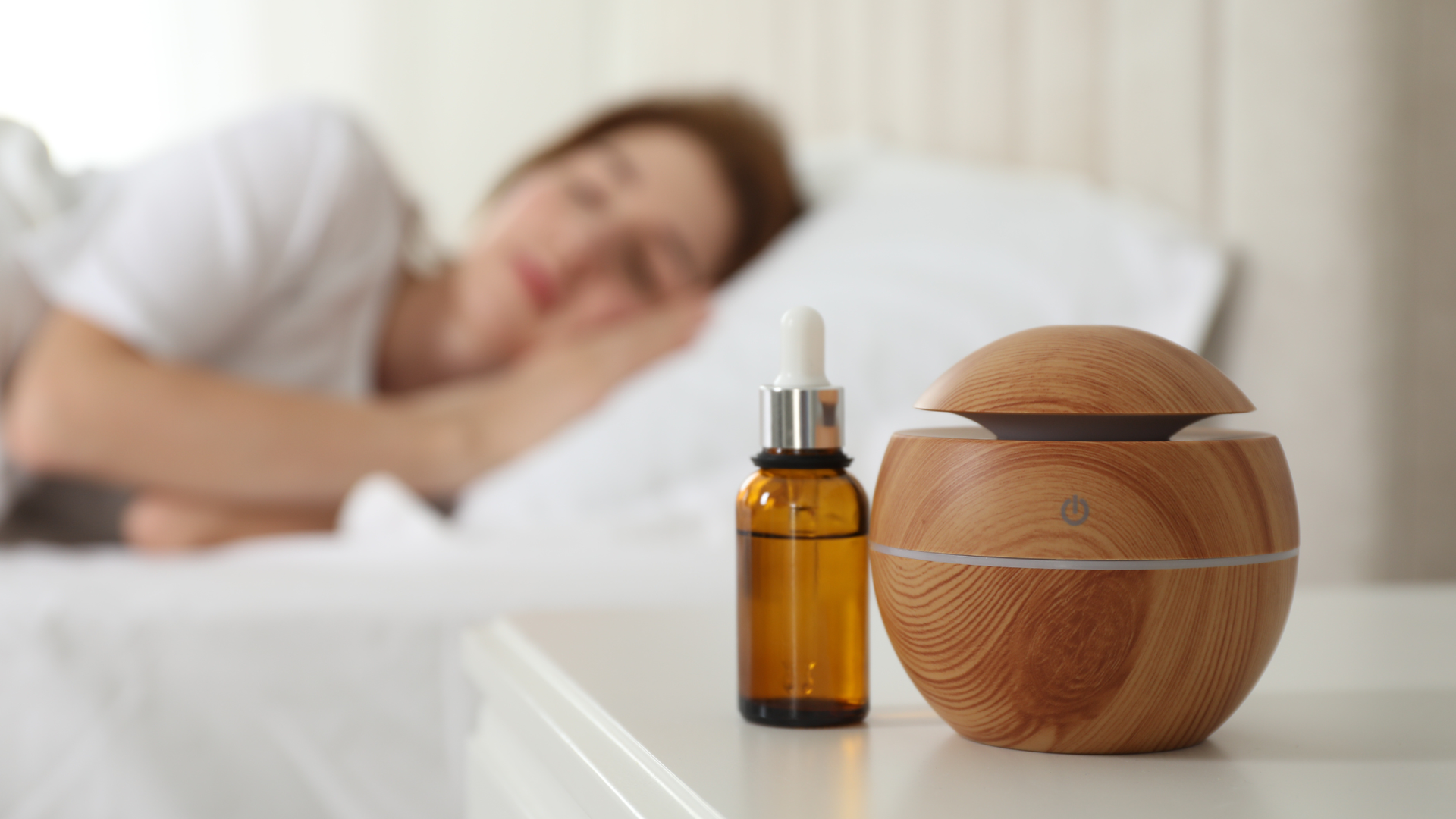
Add one scent cue: diffuse a calming aroma for 20–30 minutes while you do your wind-down tasks, then turn it off before sleep (especially if anyone in the home is scent-sensitive).
Night 3–4: Replace scrolling with a “hands-busy” habit
Most people don’t need more willpower—they need a replacement. Try: prepping coffee/water bottle for the morning, laying out clothes, a 5-minute tidy, or a paper book.
Add a topical ritual (properly diluted): after washing up, massage diluted essential oil into shoulders or feet as a physical “end-of-day” marker.
Night 5–6: Tighten your light environment
Swap overhead lighting for lamps, and keep light warmer and dimmer in the hour before bed. If you must use a screen, reduce brightness and avoid stimulating content.
Keep your bedtime scent consistent (one blend, one association). Brains love predictable patterns—especially when stress is high.
Night 7: Make it your “default setting”
Decide what your non-negotiable is for weeknights: a set “screens off” time, a 10-minute wind-down ritual, or keeping the phone out of bed.
If you slip, don’t reset to zero. Just return to your next cue: dim lights, breathe slowly for 60 seconds, and use the same calming scent.
Ritual ideas for different households
Parents & caregivers
Anchor the routine to what already happens: after kids are down, set a 15-minute “reset timer,” dim lights, and use a single calming aroma while you prep for tomorrow. Short and consistent beats long and complicated.
Teens
Make it collaborative: choose a “charging zone” outside bedrooms and a cut-off time for social apps. Give them a replacement habit (music playlist, shower, stretching) and keep scent subtle.
High-stress professionals
Create an “off-ramp” for your brain: write down tomorrow’s top three tasks, set a firm stop time for email, and use a consistent bedtime scent to separate work-mode from sleep-mode.
A U.S. perspective: why “small improvements” matter
Across the United States, busy schedules, long commutes, parenting demands, and late-night phone habits can all shrink the sleep window. Public health guidance commonly emphasizes that adults should aim for at least 7 hours of sleep per night for health and safety. ( cdc.gov)
The good news: sleep often responds to steady, boring consistency. A digital detox doesn’t have to be extreme—it just has to be repeatable enough that your nervous system starts anticipating rest.
Build your bedtime ritual with YL Family
If you want help choosing a calming, family-friendly routine—sleep cues, diffuser habits, and simple evening swaps—YL Family can guide you toward a cleaner, more consistent approach to rest.
Helpful pages on YL Family
FAQ: Digital detox, sleep rituals, and essential oils
How long before bed should I stop using my phone?
Do essential oils work for sleep?
Is diffusing all night a good idea?
What if my mind races the moment I put my phone down?
How much sleep do adults need?
When should I talk with a professional about sleep?
Glossary (plain-English)