Breathwork and Aromatherapy: Combining Essential Oils for Instant Anxiety Relief
A simple, nervous-system-friendly reset you can use in minutes—anywhere
When anxiety spikes, the goal isn’t to “think your way out” of it—it’s to help your body shift gears. Two of the fastest, most practical tools for that are slow, paced breathing and aromatherapy . Used together, they create a steady rhythm for your mind and a sensory cue for your nervous system, helping you feel more grounded and present. At YL Family , we love teaching families how to build small wellness rituals that are realistic on busy days and supportive in big moments.
Why breathwork helps so quickly (even if you’re not “good at meditating”)
Slow breathing changes your physiology in real time. Research on paced breathing shows that slower rates—often around ~6 breaths per minute —can increase heart rate variability (HRV) and support parasympathetic (“rest-and-digest”) activity, which is closely tied to feeling calmer and more regulated. ( pmc.ncbi.nlm.nih.gov)
Key idea: Anxiety often shows up as faster, shallower breathing. Paced breathing gently tells the body, “We’re safe enough to slow down,” which can reduce that “spinning” feeling.
Why aromatherapy can be a powerful partner for breathwork
Aromatherapy uses plant-derived essential oils for wellness support through scent (and sometimes topical use). Organizations like NCCIH describe aromatherapy as a complementary approach that many people use for stress and wellbeing. ( nccih.nih.gov)
Lavender is one of the most studied oils for anxiety, with systematic reviews and meta-analyses suggesting benefit (with results varying depending on how it’s used and the study design). ( pmc.ncbi.nlm.nih.gov) Bergamot is also frequently discussed in the research for its calming profile, including clinical contexts like pre-procedure anxiety. ( pmc.ncbi.nlm.nih.gov)
Practical benefit: Scent can act as a “switch.” When you pair a specific aroma with a specific breathing pattern, your brain learns the association—so the routine feels easier to start the next time.
A “3-Minute Calm Reset” (breathwork + aromatherapy)
Step 1: Choose your aroma (keep it gentle)
- Lavender-forward for a soft, settling feel (commonly used in studies for anxiety support). ( pmc.ncbi.nlm.nih.gov)
- Citrus-forward (like bergamot) when you want calm without feeling “sleepy.” ( pmc.ncbi.nlm.nih.gov)
- “Comfort” blend (lavender + gentle citrus) for everyday nervousness, commuting stress, or before social events.
Step 2: Pick a delivery method (simple is best)
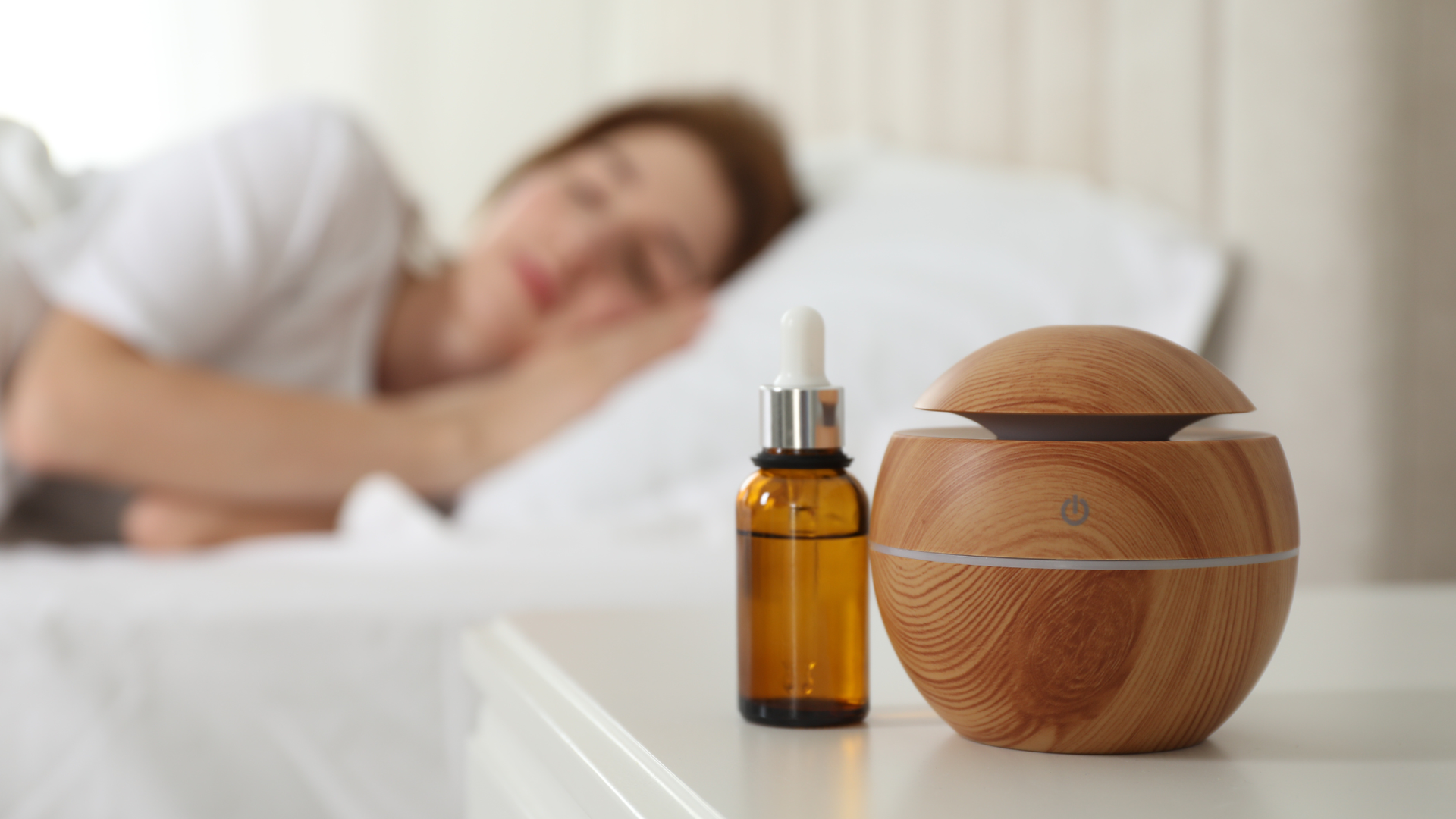
- Diffuser: Great at home, especially in an evening routine.
- Personal inhalation: Inhale from a tissue/cotton ball held a few inches away (avoid touching skin with undiluted oil).
- Topical (diluted): Apply to the chest/neck/wrists only after proper dilution and a patch test.
Step 3: Breathe at a steady pace for 3 minutes
Try this paced pattern (comfortably—never force your breath):
Inhale 4 seconds
through the nose
Exhale 6 seconds
through the nose (or softly through pursed lips)
Repeat for 18 cycles
(about 3 minutes)
This style of slow breathing aligns with research showing calming physiological shifts with slower rates near ~6 breaths per minute and improved HRV. ( pmc.ncbi.nlm.nih.gov)
When to use this routine (and when to choose something else)
| Situation | What to do | Aroma suggestion |
|---|---|---|
| Pre-meeting jitters, racing thoughts | 3 minutes of 4-in/6-out breathing + gentle scent cue | Bergamot or citrus-lavender |
| Evening “wired but tired” | 5 minutes of slower breathing + dim lights + quiet room | Lavender-forward |
| You feel dizzy with slow breathing | Breathe normally, then slow by just 10–15% (no breath holds) | Very light diffusion only |
| Panic symptoms, chest pain, or you’re unsure what’s happening | Seek medical evaluation; use calming tools only as supportive care | Skip strong scents; prioritize safety |
Note: Aromatherapy and breathwork can be supportive, but they’re not a substitute for professional care if anxiety is persistent, worsening, or affecting daily functioning.
Essential oil safety: the non-negotiables
Safe use matters—especially in family homes. Guidance from reputable health organizations commonly emphasizes: don’t ingest essential oils unless specifically directed by a qualified clinician, and dilute before skin use . ( my.clevelandclinic.org)
- Diffuse smart: use a well-ventilated room and take breaks (for example, 30–60 minutes on, then off).
- Topical = diluted: especially for sensitive skin; do a patch test first. ( my.clevelandclinic.org)
- Keep oils away from eyes and mucous membranes.
- Extra caution for pregnancy, asthma, babies/young children, and pets—ask for individualized guidance.
A local angle: making anxiety support realistic across the United States
Whether you’re navigating a hectic school calendar, long commutes, business travel, or caregiving stress, the most useful tools are the ones you can repeat consistently. A breathwork + aromatherapy routine works well because it’s:
- Portable: a small inhalation option fits in a purse, backpack, or desk drawer.
- Low time commitment: 3 minutes is often enough to shift the trajectory of a stressful moment.
- Family-friendly (with safety): adults can model slow breathing, and kids/teens can learn a simple “smell and slow” routine with age-appropriate guidance.
If you’d like help choosing a calming routine that fits your home—daytime calm, school focus, bedtime wind-down—YL Family can help you build a plan that feels simple and supportive.
Build your calming routine with YL Family
Explore essential oils and natural wellness favorites to support stress, mood, and everyday resilience—then pair them with a simple breathing practice you can repeat anytime.
FAQ: Breathwork + aromatherapy for anxiety relief
How fast should I breathe to calm anxiety?
Many people feel a noticeable shift when they slow down toward ~6 breaths per minute (about 10 seconds per full breath). If that feels too slow, start with a gentler pace and gradually slow over time. ( pmc.ncbi.nlm.nih.gov)
What essential oils are best for anxiety relief?
Lavender is one of the most researched for anxiety. Some evidence also supports citrus oils like bergamot in calming settings. Your best choice is often the one you personally find pleasant and relaxing. ( pmc.ncbi.nlm.nih.gov)
Is it safe to put essential oils directly on my skin?
Typically, no—undiluted oils can irritate skin. Dilution and patch testing are widely recommended, and ingestion is generally discouraged unless you have qualified medical guidance. ( my.clevelandclinic.org)
Why do I feel lightheaded when I try breathwork?
Lightheadedness can happen if you accidentally over-breathe (too much air, too fast) or strain your breath. Return to normal breathing, then retry with a smaller slowdown (for example, exhale only 1–2 seconds longer than your inhale).
How often can I use a breathwork + aromatherapy routine?
Breathwork can be used multiple times a day. For aromatherapy, use conservative amounts and take breaks—especially in shared spaces or around kids and pets. ( nccih.nih.gov)
Glossary
Aromatherapy
A complementary wellness approach using the aroma of essential oils (often via diffusion or inhalation) to support wellbeing. ( nccih.nih.gov)
Heart Rate Variability (HRV)
A measure of variation in time between heartbeats; higher HRV is often associated with better stress resilience and autonomic flexibility. ( sciencedirect.com)
Parasympathetic Nervous System
The “rest-and-digest” branch of your autonomic nervous system; it supports calming, digestion, and recovery, and is influenced by breathing patterns. ( pmc.ncbi.nlm.nih.gov)
Paced Breathing
Breathing at a set rhythm (for example, inhale 4 seconds, exhale 6 seconds) to support calmer physiology and steadier attention. ( sciencedirect.com)