Harnessing Essential Oils for Mindful Meditation Practices

January 24, 2026

A simple way to make meditation feel more grounding, consistent, and clear

If your meditation practice sometimes feels scattered—or you struggle to “arrive” mentally—scent can be a powerful cue. Aromatherapy is commonly used by inhaling essential oils (or applying diluted oils to skin), and many people find that a consistent aroma helps signal the nervous system that it’s time to slow down, breathe, and focus. ( nccih.nih.gov )

At YL Family , we support health-conscious individuals and families who want clean, practical wellness habits. This guide explains how to pair mindful meditation with targeted essential oils for calm attention, steadier breathing rhythms, and a clearer “start line” for your practice—without making big, complicated changes.

Why scent can support mindfulness (and what science can realistically say)

A consistent aroma works like a “ritual anchor.” Over time, your brain starts to associate that scent with stillness and attention. This is especially helpful if you’re meditating between meetings, after school pickup, or right before bed—moments when your mind may still be running fast.

Research on aromatherapy is mixed depending on the condition and the method used. The National Center for Complementary and Integrative Health (NCCIH) notes that essential oils are most often used by inhalation or diluted topical application, and evidence varies by topic (for example, insomnia research is still limited). ( nccih.nih.gov )

That said, some essential oils—especially lavender —have been studied for anxiety-related outcomes. Multiple systematic reviews and meta-analyses report reductions in anxiety symptoms in various settings, though study quality and methods can differ. ( pubmed.ncbi.nlm.nih.gov )

Choosing a “mindfulness blend”: what to look for

When people search for a mindfulness blend or meditation essential oils , they’re usually looking for one of these effects:

1) Calm + safety (settle the nervous system)
Often associated with soft floral or gentle citrus notes (commonly lavender and bergamot in aromatherapy contexts). ( nciph.org )
2) Clarity + alert calm (reduce “mental fog” without overstimulation)
Typically brighter, cleaner aromas (many people like citrus and resinous notes). Your personal preference matters here: if you dislike a scent, it can be distracting rather than grounding. ( nciph.org )
3) Grounded presence (slow, steady breath cues)
Often deeper aromas that feel “anchoring.” Many meditators prefer using the same profile repeatedly so the scent becomes a reliable ritual signal.

Practical tip: choose one blend for meditation only. Using the same aroma during chores, car rides, and workouts can weaken its “meditation cue” effect.

Did you know? Quick facts to make your practice safer and more effective

Aromatherapy is typically inhaled or diluted on skin
These are the most common approaches described by NCCIH and integrative health education sources. ( nccih.nih.gov )
Lavender is among the most studied oils for anxiety outcomes
Systematic reviews commonly report anxiolytic effects, though study designs vary. ( pubmed.ncbi.nlm.nih.gov )
More isn’t better
Start with the lowest amount of aroma that you can still notice. Strong scent can become distracting, especially during breathwork.

Step-by-step: a 10-minute meditation ritual with essential oils

Step 1: Pick one “anchor” scent

Choose an oil or blend that you genuinely enjoy and that feels calming (not energizing). If you’re building essential oil clarity into a morning practice, lean toward a “clear and clean” aroma; for evening, choose something softer and more settling.

Step 2: Decide how you’ll use it (keep it simple)

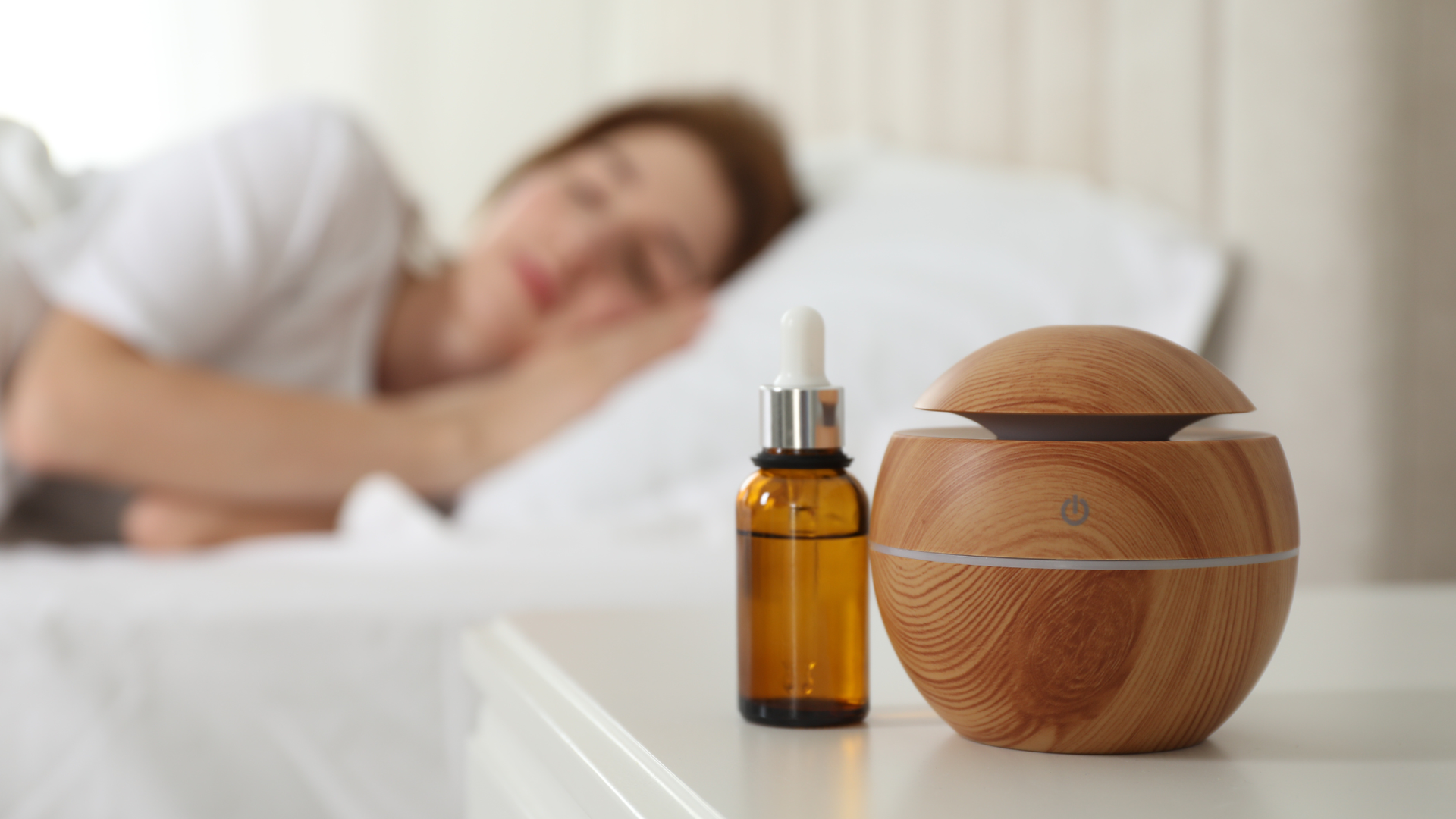
Aromatherapy is most commonly done by inhalation (diffuser, personal inhaler, or a drop on a tissue nearby) or by applying a properly diluted topical blend to skin. ( nccih.nih.gov )

Low-mess option for consistency
Use the same approach each time (example: diffuse for 10–15 minutes while you meditate). Consistency matters more than intensity.

Step 3: Pair scent with a single meditation technique

Keep your method steady for 1–2 weeks so your body learns the routine. Try one:

Breath-counting (easy for beginners)
Inhale 1, exhale 1 … up to 10, then restart at 1. Each time your mind wanders, return to “1.”
Body scan (great for tension)
Move attention from forehead to toes, noticing sensation without fixing it. Let the aroma remind you to soften your jaw and shoulders.
Single-word focus (clarity cue)
Choose one word like “calm,” “steady,” or “clear.” Repeat it gently on the exhale.

Step 4: Close the loop (so your brain remembers)

At the end, take one slow inhale, notice the scent, and mentally label the feeling you want to associate with it: “settled,” “clear,” “supported.” This strengthens the scent-to-state connection over time.

A helpful comparison table: match your intention to a routine

Meditation intention Best practice style Scent strategy Pro tip
Calm down after a stressful day Body scan Softer aroma; keep intensity low Pair with longer exhale (exhale slightly longer than inhale)
Mental clarity before work or school Single-word focus Clean, bright aroma that feels “focused” Meditate sitting upright; keep sessions short and consistent
Build consistency (habit formation) Breath-counting Use the exact same scent each time Tie it to an existing habit (after brushing teeth, before coffee)
Nighttime wind-down Gentle breath awareness Light aroma; avoid overpowering diffusion Dim lights + no screens for the final few minutes

Local angle: mindful living routines that work in the United States

Many people in the U.S. are balancing busy family schedules, long commutes, and screen-heavy days. A short, repeatable “micro-practice” often sticks better than an ambitious routine that only happens on weekends.

The 3-minute reset (midday)
1 minute slow breathing + 2 minutes body scan. Use your anchor scent at the same time each day.
The “doorway practice” (after work)
Before you switch into family mode, pause for 10 breaths. Let aroma be the cue to release the workday.
Bedtime consistency (for the whole household)
Keep scent light and predictable. The goal is “softening,” not filling the room with fragrance.

If you’re building a family-friendly routine, start with brief sessions and keep safety front and center—especially around children, pets, and anyone with respiratory sensitivity.

Ready to build a personalized meditation + essential oil ritual?

Browse curated wellness options and create a simple routine you’ll actually use—whether your goal is calm, clarity, or a more consistent mindfulness practice.

Helpful links from YL Family

If you want to build a well-rounded routine, these pages can support your next step:

FAQ: Meditation essential oils, mindfulness blends, and safe use

Do essential oils “make you meditate better”?
They’re best viewed as a supportive tool: a consistent scent can help you settle faster and stick with a routine. Research varies by oil and outcome, and aromatherapy evidence is mixed depending on the condition being studied. ( nccih.nih.gov )
Which oil is best for anxiety during meditation?
Lavender is one of the most studied oils for anxiety-related outcomes in clinical research reviews, though results and quality vary across studies. ( pubmed.ncbi.nlm.nih.gov )
Is inhalation better than topical use?
Aromatherapy commonly uses both inhalation and diluted topical application. The “best” method is the one you’ll use consistently and comfortably—while following basic safety (proper dilution, avoiding irritation, and respecting sensitivities). ( nccih.nih.gov )
How long should I diffuse during meditation?
For most people, diffusing during a 5–15 minute session is plenty. Start light and adjust—your goal is a gentle cue, not an overpowering fragrance.
Can kids use meditation essential oils too?
Families often prefer gentle, low-intensity aromatherapy and clear boundaries (no undiluted topical use, keep oils out of reach, and avoid strong diffusion). If your child has asthma/allergies or you’re pregnant/breastfeeding, check with a qualified clinician for personalized guidance.

Glossary (quick definitions)

Aromatherapy
The use of essential oils from plants as a complementary health approach, most often by inhalation or diluted application to the skin. ( nccih.nih.gov )
Mindfulness blend
An essential oil (or blend) chosen to support a mindful state—commonly calm attention, steady breathing, and reduced distraction.
Anchor scent
A single aroma you reserve for meditation so your brain associates that scent with “it’s time to be still.”
February 10, 2026
Swap jittery energy drinks for a balanced lift with essential oils. Learn safe inhalation, diffuser routines and DIY pick-me-up steps for steady focus.
February 7, 2026
Learn pet-friendly methods to remove, neutralize, and refresh odors with gentle essential oil use. Safe dilution tips and cleaning keep your home fresh.
February 5, 2026
Discover how targeted essential oil blends can improve scalp health and support hair growth with simple routines, safe dilutions, and research-backed tips.
February 2, 2026
Learn safe, natural essential oil techniques to calm pre-teen anxiety. Discover proper dilution, mindful diffusion, and simple routines for calm.
January 30, 2026
Explore safe, practical ways to use essential oils to support healthy blood sugar and metabolic balance. Discover easy routines for stress, sleep & movement.
January 27, 2026
Ease menstrual cramps naturally with heat, gentle movement, stress relief, and essential oil remedies. Follow a simple self-care routine for comfort.
January 22, 2026
Learn to make your own toxin-free deodorant with essential oils. Step-by-step cream recipe, troubleshooting tips, and seasonal tweaks for all skin types.
January 19, 2026
Discover safe at-home essential oil routines for headache relief. Learn dilution guidelines, aromatherapy tips, and quick comfort routines to ease tension.
Essential oils for your family's wellness
January 15, 2026
Learn simple, safe ways to integrate essential oils into your family's daily wellness routine—from morning diffusers to bedtime rituals—while keeping everyone in mind.
Essential oils for Clarity and Focus
January 14, 2026
Discover practical essential oil blends, safe usage tips, and daily routines to boost focus, alertness, and mental clarity through aromatherapy.