Creating a Tranquil Bedroom: Oils for Restorative Sleep
A calmer room, a steadier bedtime, a more rested morning
Restorative sleep isn’t only about “going to bed earlier.” For many adults and families, sleep improves most when the bedroom supports the body’s natural wind-down: lower light, cooler air, quieter sound, and a consistent routine. Essential oils can be a helpful part of that routine—especially when used through diffusion or a light room spray—because scent is closely tied to relaxation cues and bedtime habits.
At YL Family , we focus on simple, repeatable steps that help you create a peaceful sleep space—without overcomplicating your evenings. This guide shares practical, bedroom-friendly ways to use oils, along with sleep-environment tips that align with established sleep guidance (including the common recommendation that adults aim for at least 7 hours of sleep per night).
Why the bedroom matters (more than most people think)
Your brain learns “sleep cues” from your environment. When your room consistently signals nighttime—dim lighting, comfortable temperature, calming scent—your body can transition more smoothly from alertness to rest. A helpful way to think about it: bedtime is a sequence, not a switch.
Two of the strongest environmental levers are temperature and light . Many sleep resources recommend a cooler bedroom—often cited around 60–67°F —because the body’s core temperature naturally drops as part of the sleep process. Even a few degrees can make a difference in how quickly you fall asleep and how often you wake.
Oils don’t replace good sleep habits, but they can complement them by pairing a consistent bedtime scent with your wind-down routine—making it easier to stay consistent from night to night.
Choosing oils for bedtime: what “sleep oils” usually means
When people search for sleep oils , they’re usually looking for aromas associated with calming, grounding, and a quieter mind at night. One of the most studied is lavender , which has research suggesting it may support perceived sleep quality in adults when used as an aromatherapy intervention.
Beyond lavender, many people also enjoy gentle, bedtime-leaning profiles like:
Comforting, “settling” scents that pair well with a dim, quiet bedroom.
Cozy, grounding aromas that feel especially fitting in winter or dry climates.
Best for your pre-bed routine (not necessarily right at lights-out) if you find bright scents energizing.
The “best” scent is the one you’ll use consistently and associate with rest. If you’re new to essential oils, start with one primary bedtime aroma for 2–3 weeks so your brain learns the cue.
Quick “Did you know?” facts
Consistent, adequate sleep supports mood, energy, and day-to-day focus.
Many resources cite an ideal sleep temperature range around 60–67°F (personal comfort varies).
A steady wind-down routine (same steps, same order) can help your body transition into rest more predictably.
Step-by-step: build a bedroom relaxation routine with diffusion + spray
1) Start with the room basics (takes 5 minutes)
Oils work best when your bedroom already feels “sleep-friendly.” Before you add scent, check these fundamentals:
2) Diffuse for a short window (not all night)
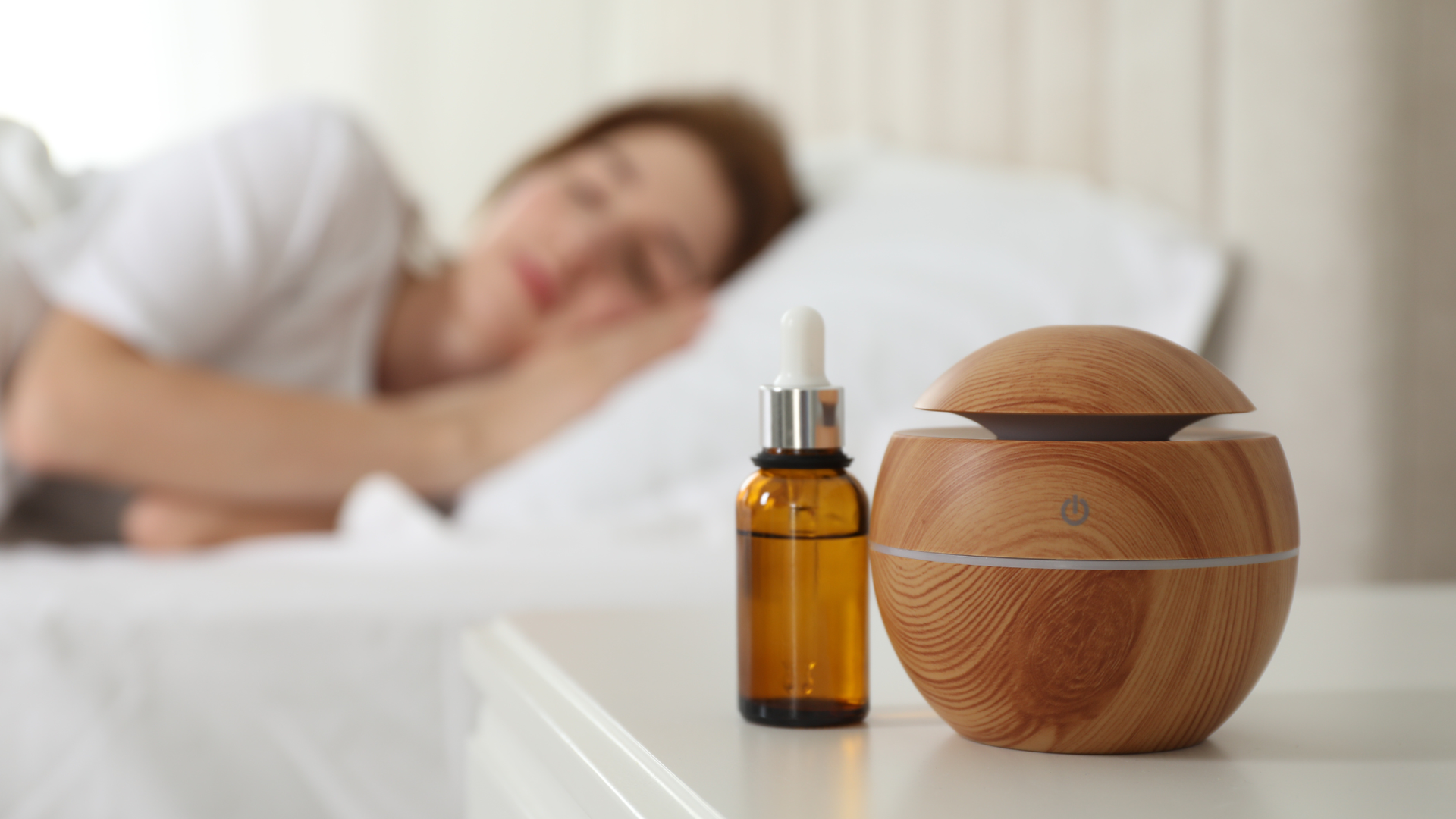
A simple approach: diffuse for 20–45 minutes while you’re reading, stretching, or doing a calm routine, then turn it off at lights-out (or use an intermittent/auto-off setting if your diffuser has one).
If you’re sensitive to scent, start lighter—fewer drops and a shorter session—then adjust gradually.
3) Make a gentle bedroom relaxation spray (fabric-safe habits first)
A light mist can cue “bedtime” without running a diffuser. Use it on bedding lightly and allow it to dry before getting in. Always patch test on fabric first.
Safety note: keep sprays away from eyes, and use extra caution with kids, pets, and anyone with asthma or fragrance sensitivity.
4) Pair scent with one “anchor habit”
Oils tend to be most effective as a routine cue when paired with a consistent calming action: a 5-minute stretch, legs-up-the-wall, slow breathing, or a short gratitude list. Do the same action in the same order each night for two weeks and notice what changes.
Quick comparison table: diffuser vs. spray vs. personal routine
| Option | Best for | Pros | Watch-outs |
|---|---|---|---|
| Diffuser (20–45 min) | Evening wind-down | Consistent scent cue; easy habit | Too strong if overused; be mindful with kids/pets |
| Bedroom relaxation spray | Quick routine, guest rooms | Fast; no device needed | Fabric patch test; avoid over-misting pillows |
| “Anchor habit” (breath/stretch) | Falling asleep faster | Works anywhere; builds consistency | Needs repetition to feel natural |
Common pitfalls that quietly sabotage bedroom relaxation
A United States–friendly local angle: seasonal shifts and indoor comfort
Across the United States, sleep comfort changes with seasons: winter heating can dry the air, summer nights can run warm, and shoulder seasons can bring big temperature swings between day and night. If your bedroom feels stuffy or too hot, prioritize airflow, breathable bedding, and a cooler thermostat setting.
For families, consistency can be the anchor: keep bedtime steps similar even when travel, holidays, or school schedules shift. A familiar bedtime scent (diffused briefly or used as a light room spray) can help the bedroom feel like a “home base” for rest.
Shop calming bedtime essentials with YL Family
FAQ: Sleep oils, bedroom relaxation, and restorative sleep
What are the best essential oils for bedroom relaxation?
How long should I diffuse oils before bed?
Can I spray essential oils directly on my pillow?
What bedroom temperature is best for restorative sleep?
What if I’m doing all of this and still can’t sleep well?
Glossary (quick, practical definitions)
A method of dispersing essential oils into the air (typically with a diffuser) to create a light aroma in a room.
The habits and environmental choices that support better sleep—like consistent sleep/wake times, a cool/dark bedroom, and a calming bedtime routine.
Your body’s internal 24-hour clock that influences sleepiness, alertness, and natural temperature patterns.
An ingredient sometimes used in sprays to help essential oils disperse more evenly in water, reducing “oil floating on top.”